DE

Services / Software & apps

Custom software development shaped around your workflow

When spreadsheets, separate tools and manual transfers become a constraint, the starting point is a clear workflow. We turn it into an application or improve a specific part of your existing system.
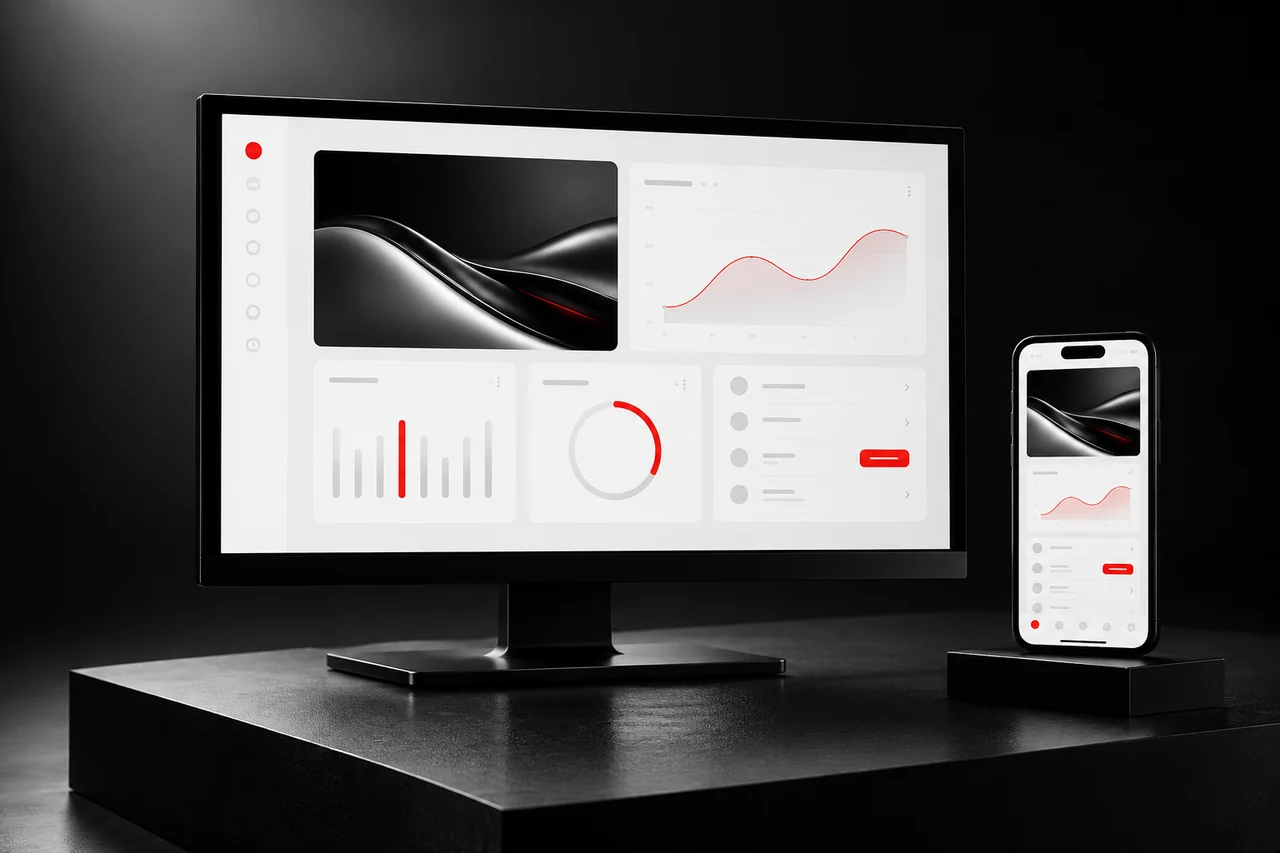
Black monitor and smartphone with white application layouts and red controls.

Who and what this is for

For businesses with a concrete operational problem and product teams with a defined idea. Examples include managing orders in one place, joining data from two systems or making an existing service available on mobile.

An existing codebase can be the starting point. We first review its structure, dependencies and the affected user journey. That helps establish whether an extension, a repair or a new application makes sense.

A concrete example

Illustrative scenario explaining the service

Track jobs from the first enquiry to handover

The situation
A service team receives enquiries by email. Dates, responsibilities and progress live in separate spreadsheets. When a question arises, nobody is sure which version is current.
The starting point
An anonymised sample job, the current status steps and the team roles are enough for an initial shared outline.
What we would build
A shared job view with owners, status changes, search and a clear handover step. An existing system can be connected if it provides the required data.
How the result would be checked
A sample job is created, assigned, updated and completed. Missing required information and unauthorised changes are checked too. The team can follow the same current state.

What you receive

  • An agreed user journey, including the screens, inputs and outputs it needs.
  • A web application, mobile app or integration within the agreed scope, connecting existing systems where needed.
  • Useful error states, appropriate access controls and checks for the important workflows.
  • Source code, setup instructions and a documented handover to the agreed environment.

How we work

  1. Define the workflow and its boundariesWe establish who will use the application, which data it needs and how you will judge the completed feature. A small initial scope makes assumptions easier to test.
  2. Build and check the real journeyA usable version provides a shared basis for review. We check normal inputs, relevant failures and the agreed devices or integrations.
  3. Hand over and plan the next stepYou receive the agreed source files and operating information. Additional features and ongoing support are defined separately.

One useful workflow can be a sensible first step. An idea does not always need a complete platform from day one.

Useful for a first conversation

  • A short description or screenshots of the current workflow.
  • Existing applications and required integrations.
  • The first feature that needs to work in everyday use.

Define the scope together

We separate the core journey, useful additions and later ideas. That makes it possible to agree a small usable version before adding further features.

Related projects

Working together

How is the price determined?

It depends on the objective, starting point and agreed scope. Deliverables, required input and fees are described before commissioning. A limited first step can help resolve open questions.

How long does a project take?

Timing depends on scope, available material, access and approvals. A schedule is agreed for the actual project. Changed requirements or missing content can affect it.

What is included after handover?

The agreed files, source material, setup notes and check results are handed over. Hosting, ongoing maintenance, support and further changes are explicitly agreed as needed.

More services

What would you like to change?

Tell EVA – right now, no appointment, no waiting. She clarifies goal and scope with you and passes your project straight to us.

Start with EVA

Prefer email: hello@obholz.solutions

Opens your email app with a prepared enquiry.